
service
Infant Oral Health Care in Oklahoma City
Your baby’s earliest experiences can lay the foundation for a lifetime of healthy smiles. From teething and brushing to bottles, breastfeeding, pacifiers, and fluoride, our pediatric dental team is here to help you confidently navigate every new stage.
When Should Your Baby First Visit a Dentist?
The American Academy of Pediatric Dentistry recommends scheduling a child’s first dental visit when the first tooth appears or no later than their first birthday. Visiting early allows our team to evaluate your baby’s development, identify potential concerns, and establish healthy habits before problems arise.
Why Infant Dental Care Matters
Baby teeth help children chew food, learn to speak clearly and maintain space for the permanent teeth growing beneath the gums.
Because the enamel on baby teeth is thinner than the enamel on permanent teeth, decay can progress quickly once it begins. Preventive infant dental care allows us to monitor your baby’s smile and provide practical guidance tailored to your child.

What to Expect at Your Baby’s First Dental Visit
Your baby’s first appointment is typically brief, comfortable, and focused on prevention. We take time to discuss your questions and help your baby become accustomed to a gentle oral examination.
A gentle examination of the teeth, gums, jaws, and bite
An assessment of your child’s cavity risk
A review of brushing, fluoride, feeding and oral hygiene habits
Guidance on teething, pacifiers, thumb-sucking, bottles and training cups
Preventive recommendations based on your baby’s development
Crying during an infant dental visit is completely normal. Our team understands this stage and will help make the visit as calm and efficient as possible.

Preventing Cavities From the Very First Tooth
Tooth decay is preventable, but cavity prevention needs to begin early. We consider feeding patterns, oral hygiene, fluoride exposure, family dental history, and visible changes in the teeth to recommend care that fits your child.

Brushing Your Baby’s Teeth
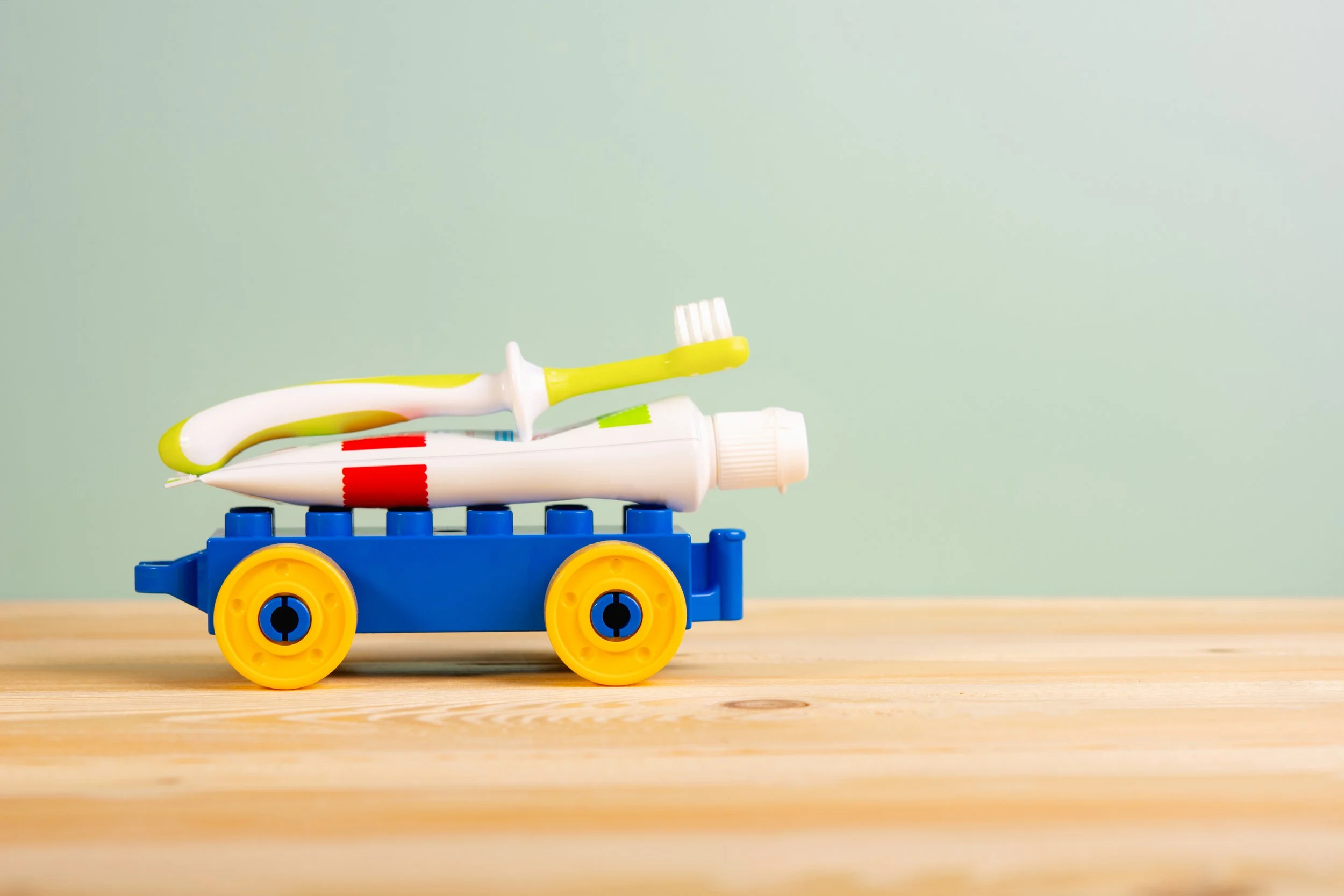
Before teeth erupt, gently wipe your baby’s gums with a clean, damp cloth. Once the first tooth appears, begin brushing twice a day with a soft, child-sized toothbrush.
When two teeth begin touching, it may also be time to start cleaning between them. Our team can demonstrate age-appropriate brushing and flossing techniques.
Use a smear of fluoride toothpaste approximately the size of a grain of rice.

Bottles, Breastfeeding, and Early Childhood Cavities
Breast milk and formula provide important nutrition, but frequent or prolonged exposure to milk or sugary liquids can increase cavity risk after teeth erupt.
Avoid putting your baby to bed with a bottle containing milk, formula, juice or another sweetened drink. If a bottle is used for comfort, water is the safest choice once developmentally appropriate.
Pay special attention to nighttime feeding after teeth begin to appear.

Fluoride and Your Baby’s Smile
Fluoride strengthens tooth enamel and helps protect teeth from cavities. Young children may receive it through drinking water, toothpaste or professional treatments.
Your child’s needs depend on their age, cavity risk and primary water source. We can discuss your family’s water and recommend the appropriate approach.
Water source matters. Well, bottled and filtered water may contain different fluoride levels.
Every child’s feeding needs are different. Our goal is not to judge parents’ choices, but to help families understand how feeding patterns and oral health work together.
Help for Teething & Developing Smiles
Most babies begin getting teeth around 6 months of age, although timing varies considerably. Common signs include increased drooling, a desire to chew, tender gums and temporary fussiness.
You can often provide comfort with a clean, chilled teething ring or by gently massaging the gums with a clean finger.
Common Teething Signs
Drooling, chewing, tender gums, and temporary fussiness.
Call Your Pediatric Dentist
High fever, severe diarrhea or significant illness are not typical signs of teething.
Guidance for Pacifiers & Thumb-Sucking
Sucking is a natural reflex, and pacifiers or thumb-sucking can provide comfort during infancy. These habits do not always cause a dental problem, particularly when children stop at an appropriate age.
Prolonged habits may eventually affect the teeth, palate or bite. We can monitor your baby’s development and offer age-appropriate guidance as your child grows.

Establishing a Dental Home for Your Baby
A dental home is an ongoing relationship that provides accessible, coordinated, and family-centered care. Establishing this relationship by your child’s first birthday gives you somewhere to turn when questions, developmental changes or dental emergencies arise. Starting early allows us to focus on prevention and helps your child experience the dentist as a familiar part of staying healthy.
Frequently Asked Questions
-
Yes. The first visit is not based on the number of teeth. Even with only one or two teeth, the dentist can assess development and cavity risk and help you begin an effective home-care routine.
-
You may still schedule an infant oral health visit by age 1. We can examine your baby’s gums and oral structures and determine whether additional evaluation is necessary.
-
X-rays are not routinely needed for every infant. They are recommended based on a child’s health history, oral examination, development and risk for dental disease.
-
Contact a pediatric dentist promptly. Seek immediate medical attention for uncontrolled bleeding, loss of consciousness, difficulty breathing or other signs of serious injury.
-
Many children benefit from visits approximately every six months, but the appropriate schedule depends on your baby’s oral health and cavity risk.
Schedule Your Baby’s First Dental Visit in Oklahoma City
Your baby’s first dental visit is an important milestone, and it does not have to feel overwhelming. We make early care comfortable, informative, and encouraging for the entire family.